Sound carcasses
The units themselves need to be solid and square. If cupboards are still hanging properly and the doors close cleanly, you are in good shape. Spraying will not straighten a door that no longer sits flush.
Transformation Guide
A straight explanation of how a kitchen respray works, which kitchens suit it, what the preparation really involves, how long it takes and what drives the price. Written by the person who does the spraying.
A fitted kitchen is usually the most expensive thing in a house after the bathroom, and most of the kitchens people want to rip out are structurally fine. The carcasses are solid, the hinges work, the layout suits the room. What has actually gone wrong is the colour: a cream that has yellowed, an oak that dates the whole room, a gloss white that has gone patchy around the handles.
A new fitted kitchen costs £8,000 to £15,000 and means two to four weeks of upheaval, a skip on the drive and a family eating takeaways. Respraying keeps everything that works and changes the thing that does not. It is a fraction of the cost and it is measured in days, not weeks.
It is not the right answer for every kitchen, and this guide is as much about telling you when to walk away as when to book. Read the suitability section below before you do anything else.
Suitability
Spraying is a surface process. It transforms how a kitchen looks; it cannot fix what a kitchen is made of. The honest test is whether the structure underneath is sound.
The units themselves need to be solid and square. If cupboards are still hanging properly and the doors close cleanly, you are in good shape. Spraying will not straighten a door that no longer sits flush.
Doors need to be free of swelling, delamination and lifting edges. A vinyl wrap that has started to peel at a corner has to be addressed before any coating goes on, and sometimes that means replacing that one door rather than the kitchen.
The classic problem area is the base of the sink unit, where a slow leak has blown the chipboard. Coating over swollen board hides it for a season and then fails. That is a replacement, and you will be told so.
If you want the island moved or the whole run reconfigured, spraying is the wrong tool. This changes colour and finish, not the plan of the room.
Vinyl-wrapped, melamine, laminate, MDF, solid timber and previously painted doors are all sprayable once prepared correctly. Each needs a different adhesion strategy, which is decided at the survey rather than guessed.
Existing hardware is removed and refitted, or masked where removal risks damage. If you want new handles, fitting them while the doors are off is far easier than doing it later, so mention it at quoting stage.
The process
This is the part most quotes leave vague. Preparation is the majority of the work and the reason the finish lasts. The spraying itself is the quick bit.
We count and assess the doors, drawer fronts, fixed frames and panels included in the quote. Colour, sheen, repairs, site protection and access are agreed before booking. Removable items are labelled so they can be refitted correctly.
Kitchen surfaces carry years of cooking grease, and nothing sticks to grease. Everything is degreased properly, then keyed back so the primer has a mechanical grip as well as a chemical one. Chips, dents and screw holes are filled and sanded flush at this stage, because a filler repair done after priming always shows.
We select a primer compatible with the substrate, existing finish and topcoat where the specified system requires one. Surface preparation, drying and recoating follow the manufacturer's instructions.
We assess the existing surface and specify a compatible preparation, primer and topcoat system for the job. The coating choice depends on the substrate, condition and working environment. Your written quote explains the proposed finish and aftercare.
The schedule depends on the size, condition, coating system and access. Preparation, recoating and return to use follow the product requirements and site conditions. Jay confirms the working dates and expected disruption before you book.
Doors and drawer fronts are refitted and aligned, hardware goes back on, and the whole kitchen is walked round with you looking for anything that needs attention. The tent comes out, the room is cleaned down, and you get your written five-year finish guarantee.
Colour and finish
Virtually any RAL or BS colour can be mixed, along with Farrow & Ball and Little Greene equivalents. Colours can also be matched to an existing paint or a sample you bring. Browse the range on the RAL colour page or see what is actually popular in kitchens on the popular kitchen colours guide.
Satin is the most requested kitchen sheen because it reads as a quality factory finish, cleans easily and hides everyday marks. Matt looks superb in photographs but shows finger grease around handles. Full gloss is dramatic and shows every ripple in the surface underneath, so it demands a flawless substrate.
Darker bases with lighter wall units is a well-established look and does not add material cost, though it does add masking and separate spray sessions. If you want it, raise it at quoting stage so it is priced properly rather than absorbed as a surprise.
No screen shows a colour accurately. Brightness, colour temperature and your own kitchen lighting all shift how a shade reads. Treat every image online, including the ones on this site, as a rough guide rather than a colour match.
Once your booking deposit is received you can ask for one sprayed sample panel in your chosen colour and finish, where practical for the job, so you approve the actual coating in your own light. Additional colours or extra samples may be chargeable, and you will be told the cost first.
Cupboard interiors are not normally sprayed, because they are not seen and coating them adds cost and cure time for no visible gain. If you specifically want interiors done, say so and it will be quoted.
Reference imagery
These are colour and finish references, used to show how a shade behaves on a kitchen surface. They are not photographs of ProFinish customer kitchens.
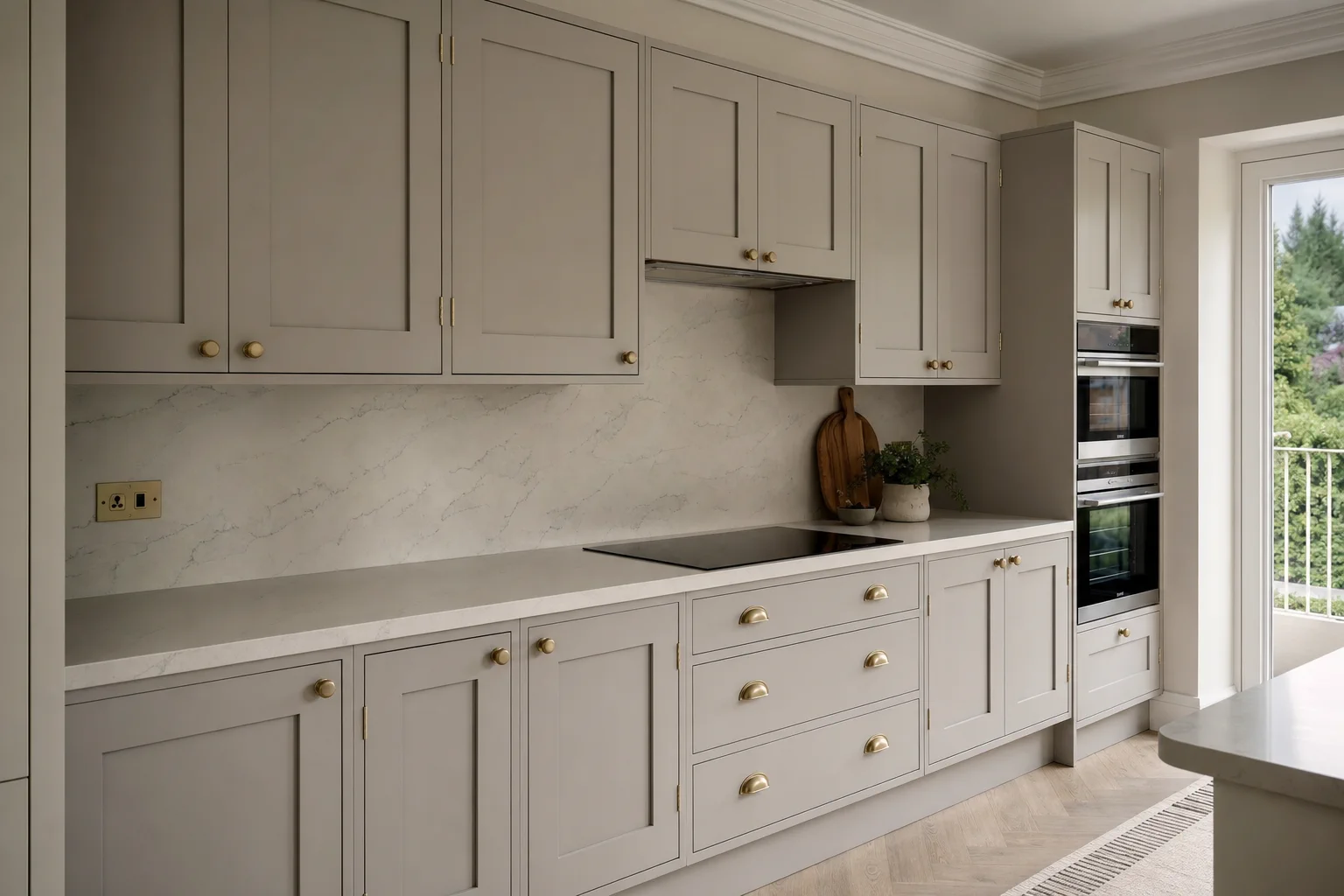
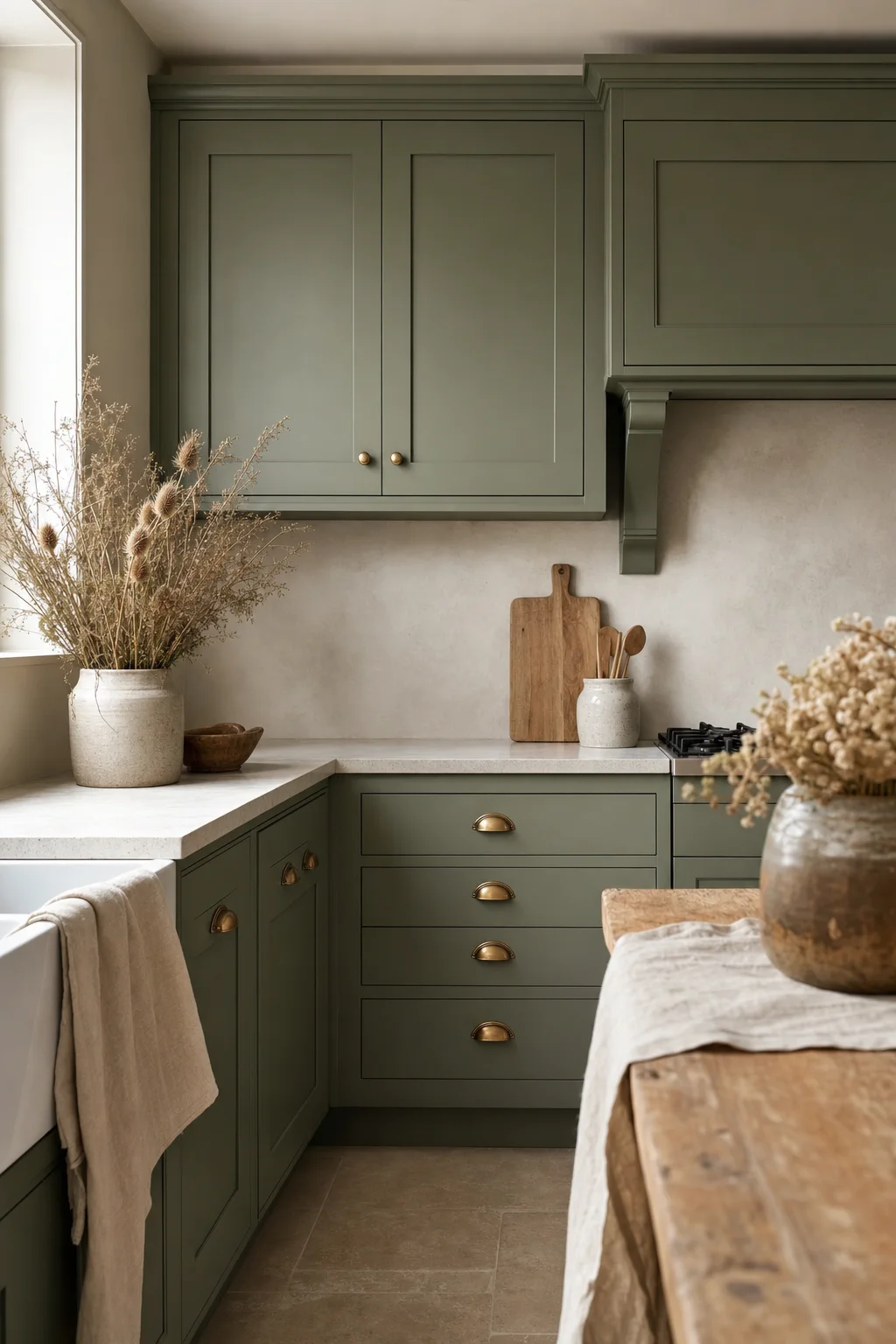
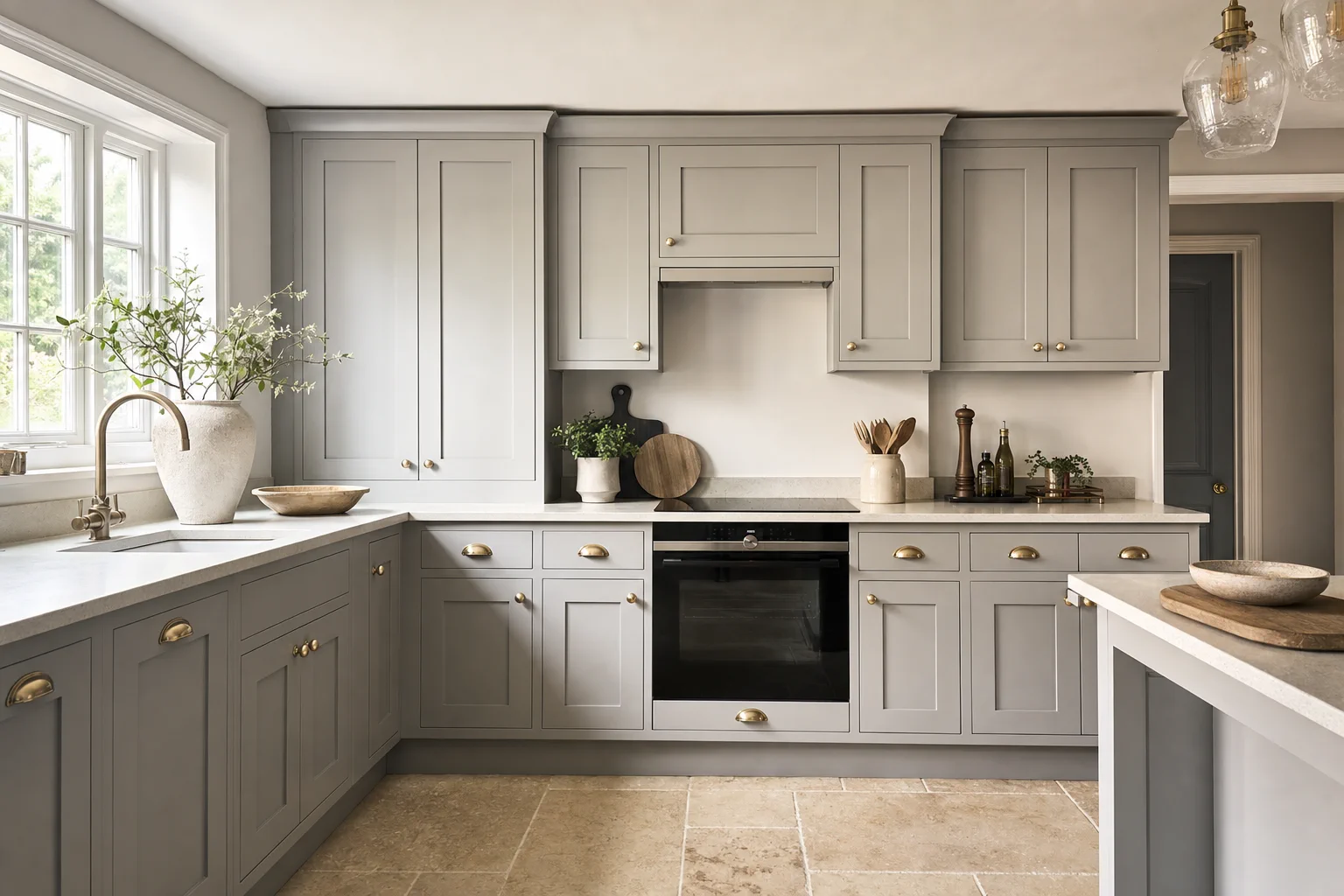
The images above are colour and finish references used to show how a shade reads on a surface. They are not photographs of ProFinish customer projects. Genuine ProFinish work is published in Our Work as each job is completed and the customer is happy for it to be shown.
Pricing factors
Kitchen quotes vary because kitchens vary. These are the factors that genuinely change the figure, so you can see where your own job is likely to sit.
A galley kitchen with 22 doors costs more than a large kitchen with 14. Every door, drawer front, end panel and plinth is a separately prepared and sprayed surface, so the count is what drives the labour.
Doors and drawer fronts only starts at £895. Adding frames, edges, end panels, plinths and cornice takes it to a full kitchen from £1,995. The difference is real work, not an upsell.
A kitchen needing chip filling, edge repairs or lifting vinyl addressed carries more preparation hours than one that just needs degreasing and keying. Preparation is the bulk of the job, so condition matters more than age.
Deep shaker profiles, beading, glazed doors and ornate cornice all take longer to prepare and spray than flat slab doors. High-detail kitchens are where quotes reach the £2,995 to £3,995 and up band.
Going from dark to very light, or running two colours, means extra coats or separate masked spray sessions. Both are entirely doable and both add time.
Suitable working space, ventilation, protection and access are assessed before booking. A tight kitchen or additional handling can affect the method, duration and price.
A properly sprayed kitchen has no brush marks and no roller texture, because nothing touches the surface but atomised coating. The sheen is even across every door, which is the detail people notice most and the thing hand-painting struggles to achieve on a run of ten doors.
We agree the colour and sheen before work starts and check consistency across the surfaces being refinished. Different materials may need different compatible coatings. A sprayed sample, where practical, helps you judge the proposed finish in your own light.
Dry to the touch does not mean fully cured. Follow the supplied aftercare and return-to-use advice, and avoid impacts or cleaning products until the finish is ready. Your written guarantee sets out the cover and exclusions.
Straight answer on whether a sample makes sense for your job.
Questions
Send three photos of your kitchen: a wide shot of the run, a close-up of a door edge, and the inside of the sink unit. That is enough for a guide price and an honest answer on whether spraying is right for your kitchen. Jay reviews enquiries personally and confirms availability.