Transformation Guide

uPVC window spraying: frames that work fine but look tired

Replacing sound uPVC windows because the frames have faded is an expensive way to solve a cosmetic problem. This is how spraying works instead, what it costs and when it is not the answer.

From £150 per frame
£495 windows-only minimum
3-year exterior guarantee
Glass and seals fully masked

The frames still work. That is the whole point.

Replacing uPVC windows costs £350 to £950 each, or £4,000 to £9,000 for a full house. That is a reasonable spend when frames have failed: blown units, rotten sub-frames, draughts, mechanisms that no longer lock. It is a very poor spend when the only problem is that white frames have gone chalky and yellow, or that the brown uPVC the house came with is thirty years out of date.

Spraying addresses the second problem directly. The frames, hinges, locks and glazing you already have stay in place, and the appearance changes completely. Anthracite grey over tired white is the single most common request, because it gives a house the modern aluminium look without the aluminium price.

The catch is that uPVC is genuinely difficult to coat. It is a low-energy plastic surface that ordinary paint slides off, which is why so many people have seen a badly painted uPVC door peeling in a neighbour's porch. Getting it to last is entirely about the adhesion system and the preparation, not about the colour.

When spraying frames is the right call

The rule is simple: if the window works, spray it. If the window has failed, replace it. Cosmetic problems are spray problems and mechanical problems are not.

Faded, chalky or yellowed white

The most common candidate by far. UV breaks down the surface of white uPVC over fifteen to twenty years, leaving it chalky and uneven. That surface layer is prepared back and recoated, which is exactly what spraying is for.
Dated colours and woodgrain

Brown, mahogany-effect and dark woodgrain uPVC dates a frontage more than almost anything else. Textured woodgrain takes preparation properly seriously, but it sprays well and the change is dramatic.

Sound frames and working mechanisms

The frame needs to be structurally sound and the window needs to open, close and lock properly. Spraying is a surface treatment and will not improve how a window operates.

Not for blown or failed units

Misted double glazing is a failed sealed unit. That is a glass problem and spraying the frame around it changes nothing. Get the unit replaced, then spray the frames, in that order.

Not for cracked or distorted frames

Cracks, heat distortion and frames pulling away from the brickwork are replacement territory. Coating over them hides the problem for a season, which serves nobody.

Conservatories and porches too

Conservatory frames, porch frames and uPVC cladding all spray on the same basis as windows. They are quoted on frame count and access rather than as a separate service.

How frames are actually prepared and sprayed

Almost all of the durability comes from the first three stages. The colour is the easy part.

01

Survey and frame count

Frames are counted and measured, access is assessed, and the condition of each frame is checked properly rather than from the pavement. Frame count and access drive the price, so both get confirmed before a figure is given.

02

Deep clean and degrease

Exterior frames carry road film, pollution, algae and years of UV-degraded chalky residue. All of it is washed and degreased off. Coating over chalk is coating over dust, and it peels.

03

Key the surface and mask everything

The surface is abraded to give the coating a mechanical grip. Then glass, seals, gaskets, hinges, handles, trickle vents, sills, brickwork and planting are all masked. On a full house this masking is a genuinely large part of the day.

04

Adhesion system for plastics

An adhesion promoter and primer system intended for low-energy plastics is applied. This is the stage that separates a coating that lasts from one that flakes, and it is the stage skipped by anyone brushing gloss straight onto uPVC.

05

Specified topcoats

Two coats in your chosen RAL colour and sheen. Exterior surfaces get a weather-resistant system matched to the substrate, confirmed in your quote. Getting that right matters far more on a south-facing elevation than most people expect.

06

Unmask, inspect and hand over

Masking comes off, every frame is inspected, edges and returns are checked, and the site is cleared. You get a written three-year exterior finish guarantee and clear guidance on cleaning during the first fortnight while cure completes.

What people choose for window frames

Anthracite grey dominates

RAL 7016 anthracite grey is the default modern frame colour and by a distance the most requested. It reads as contemporary aluminium against both brick and render. There is a full guide to anthracite uPVC covering how it behaves on frames.

Black and near-black

RAL 9005 jet black gives a sharper, more architectural line and suits render, timber cladding and Georgian-style glazing bars. It shows dust more readily than grey on a road-facing elevation.

Refreshed white

Not every job is a colour change. Plenty of people simply want tired chalky white brought back to a clean, even white, and RAL 9010 pure white does exactly that for a fraction of replacement cost.

Satin is the sensible default

Satin is the standard exterior sheen. It sheds dirt and rain well, and it does not spotlight every tiny surface variation the way gloss does across a large frame area.

Match the door, or deliberately do not

Frames and front door in the same colour reads as a considered scheme. A contrasting door against grey frames also works well. Both cost the same in coating, so it is purely a design decision.

Confirm the shade before the main work

Once your booking deposit is received you can ask for a sprayed sample panel in your chosen colour, where practical for the job. Grey in particular shifts noticeably between overcast and direct sun, so seeing it on your own elevation is worth it.

How frame colours read against a house

Colour and finish references showing how these shades behave on uPVC. Not photographs of ProFinish customer projects.

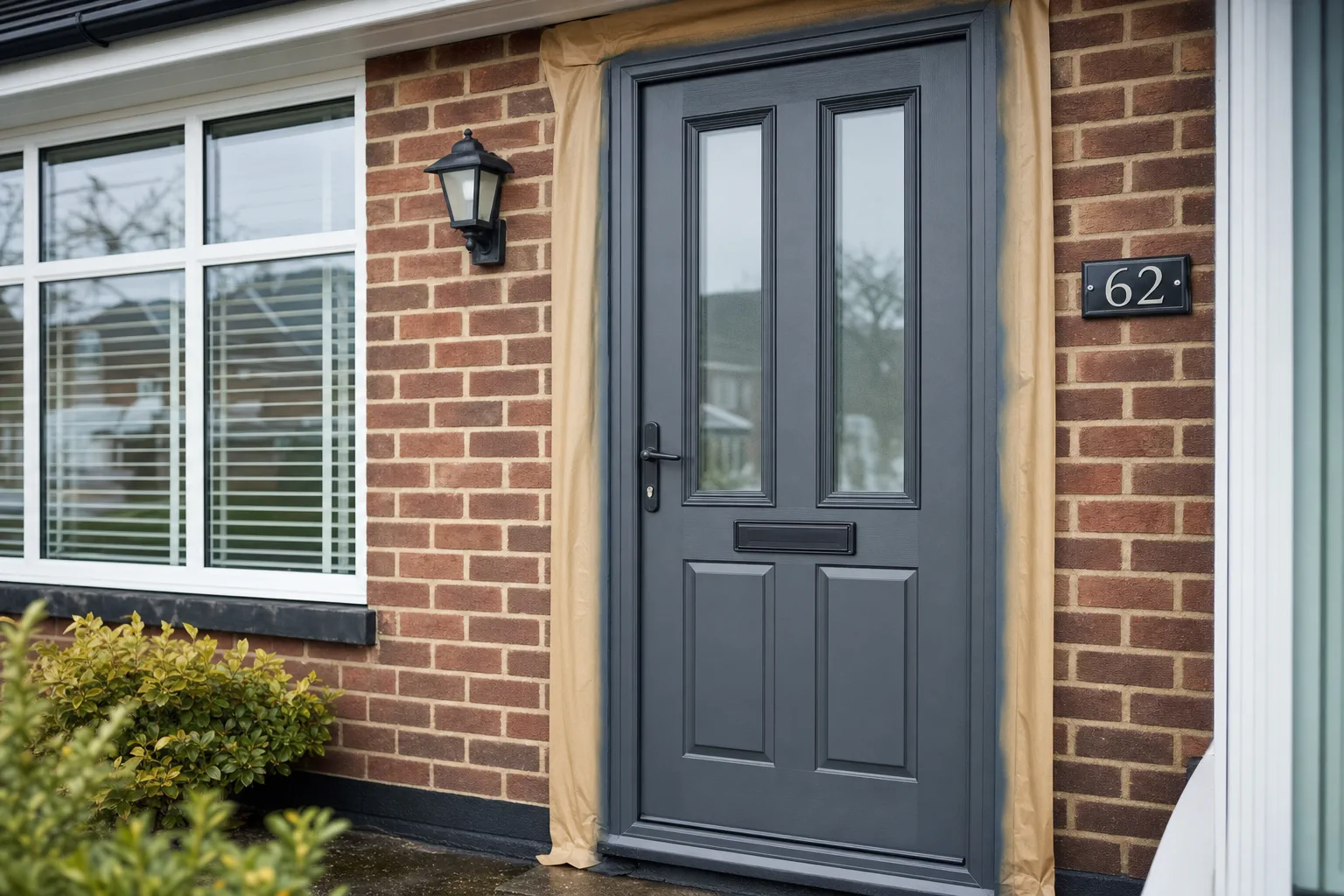
uPVC frames prepared and masked for spraying, reference image
Example finish / colour inspiration, not a ProFinish customer project. The extent of masking uPVC needs. Glass, seals, vents and hardware are all protected, never coated.
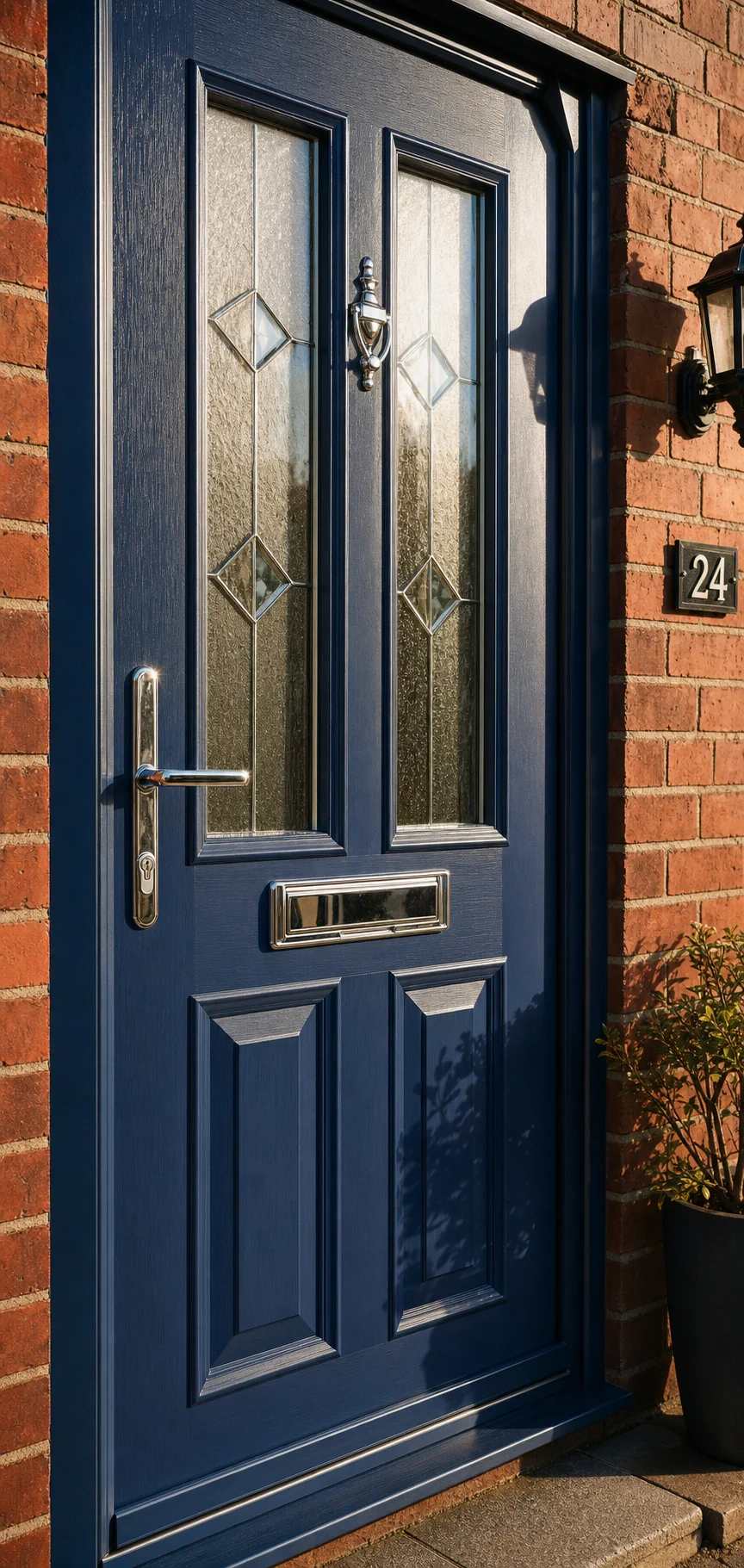
uPVC in a dark satin finish, colour reference
Example finish / colour inspiration, not a ProFinish customer project. A dark satin finish on uPVC. Shows the even, brush-mark-free surface spraying produces on a frame.

The images above are colour and finish references used to show how a shade reads on a surface. They are not photographs of ProFinish customer projects. Genuine ProFinish work is published in Our Work as each job is completed and the customer is happy for it to be shown.

What moves the figure on a window job

Frames start at £150 each, with a £495 minimum on windows-only work. These are the things that move a quote up or down from there.

How many frames

The single biggest factor, and the reason a full house of frames from £1,595 is far better value per frame than doing two. Setting up once and spraying twenty frames spreads the fixed cost of the day.

Frame size and glazing bars

A small toilet window and a large bay are not the same job. Georgian bars, leaded effect and multi-pane units multiply the masking and cutting-in time considerably.

One side or both

Exterior only is the common choice. Adding interior faces means internal masking, dust protection and working inside the room, and it is quoted separately rather than assumed.

Access and height

Ground floor with clear access is straightforward. First-floor and above, restricted side alleys, conservatory roofs and anything needing extra access equipment adds time and is assessed at survey.

Condition and texture

Heavily chalked frames need far more washing back. Textured woodgrain has more surface area than smooth white and takes longer to prepare and coat properly.

Bundling with door and garage

Doing windows alongside the front door and garage door in one visit is meaningfully cheaper than three separate jobs. Front of house from £745, or the Full Front Refresh from £1,295 for garage door, front door and front-elevation frames in one colour scheme in the agreed colour and sheen.

What the finished frames should look like

An even, factory-like satin across the whole frame, with no brush marks, no runs at the corners and no overspray on the glass or the brickwork. The line where frame meets glass should be crisp, which is entirely a function of how carefully the masking was done rather than how the coating was applied.

Colour should be consistent from frame to frame, including between the ground floor and the first floor, because the whole job is sprayed in the agreed colour and sheen. Seals and gaskets should be clean and still flexible, not stiff with paint, and vents and hardware should be free of coating and working normally.

Once cured the surface is hard and cleanable with soapy water. It should not be washed aggressively during the first fortnight while the finish keeps hardening, and exterior work is covered by a written three-year finish guarantee.

Crisp glass linesNo overspray on brick or glassSeals masked, not coatedConsistent colour across every frame3-year written exterior guarantee

Confirm your chosen colour with a professionally sprayed sample before the main work begins

Once your booking deposit is received, you can ask for one sprayed sample panel in your chosen colour and finish, so you are approving the actual coating in your own light rather than a swatch on a screen. Available where practical for the job. Additional colours or extra samples may be chargeable, and Jay will tell you the cost before anything is sprayed.

Ask About a Sample

Straight answer on whether a sample makes sense for your job.

Straight answers

Thinking about transforming yours?

Send photos of your frontage plus a close-up of one frame, and mention roughly how many windows you have. That is enough for a guide price and a straight answer on whether the frames are worth spraying.