Chalky, yellowed white
The classic candidate. UV degrades the surface of white uPVC over fifteen to twenty years, leaving it chalky and uneven. That degraded layer is washed and prepared back so the coating bonds to sound material underneath.
Colour Guide
Tired white or dated brown uPVC sprayed anthracite grey is the most requested transformation there is, and the one that changes a frontage most for the least money. Here is how it holds up.
Fifteen years ago a uPVC window came in white, and if you wanted something else you paid a premium for a woodgrain foil. Then aluminium windows became the aspirational choice, aluminium meant anthracite grey, and the whole market followed. Anthracite is now the default specification on new builds and replacement windows alike.
The result is that white uPVC no longer reads as neutral. It reads as older, particularly once it has chalked and yellowed, which UV does to white uPVC over roughly fifteen to twenty years. Brown and mahogany-effect frames date a frontage faster still.
Spraying gets you the current specification on the frames you already own. Replacing uPVC windows costs £350 to £950 each, or £4,000 to £9,000 for a full house. Spraying a full house of frames starts at £1,595, and the windows keep the glazing, mechanisms and fit that were working perfectly well already.
At a glance
| RAL reference | RAL 7016 Anthracite Grey is the standard. RAL 7015 slate grey and RAL 7024 graphite grey are the usual alternatives if you want slightly lighter or slightly bluer. |
|---|---|
| Approximate hex | #373F43. Indicative only. No screen reproduces a coating accurately, and grey is the worst offender for this. |
| Recommended sheen | Satin. It sheds rain and road film, cleans easily, and does not exaggerate every small variation across a large frame area the way gloss does. |
| Coating system | Degrease, key, plastics adhesion primer, then two coats of suitable topcoat. Exterior surfaces get a weather-resistant system matched to the substrate, confirmed in your quote. Not decorative paint. |
| Suits | uPVC window frames, front and back doors, French doors, bifolds, conservatory and porch frames, and uPVC cladding. Composite doors use the same approach. |
| Typical cost | Frames from £150 each, £495 minimum on windows-only work. Doors from £395 both sides. Full house of frames from £1,595. Prices final, as ProFinish is not VAT registered. |
| Never coated | Glass, seals, gaskets, hinges, handles, locks and trickle vents are all masked, so nothing that moves or flexes is stiffened. |
| Guarantee | Written three-year exterior finish guarantee on uPVC work. |
Suitability
The dividing line is cosmetic versus mechanical. Faded colour is what this is for. Failed windows are not.
The classic candidate. UV degrades the surface of white uPVC over fifteen to twenty years, leaving it chalky and uneven. That degraded layer is washed and prepared back so the coating bonds to sound material underneath.
Dark brown and mahogany-effect uPVC dates a house more than almost anything else. Textured woodgrain has more surface area and takes longer to prepare, but it sprays well and the change is transformative.
uPVC and composite front doors, back doors, French doors and bifolds all take the same system. Doing the door and frames together in an agreed colour and sheen is how you get a genuine match rather than a near one.
Conservatory and porch frames are frequently the most weathered uPVC on a house because of their exposure. They spray on the same basis, quoted on frame count and access.
Misted double glazing is a failed sealed unit and a glass problem. Spraying the frame around it changes nothing. Replace the unit first, then spray the frames.
Cracks, heat distortion, frames pulling from the brickwork and failed locking mechanisms are replacement territory. Coating them hides the problem for a season, which serves nobody.
Reference imagery
Colour and finish references showing the surface a sprayed finish produces on plastic frames. Not photographs of ProFinish customer projects.
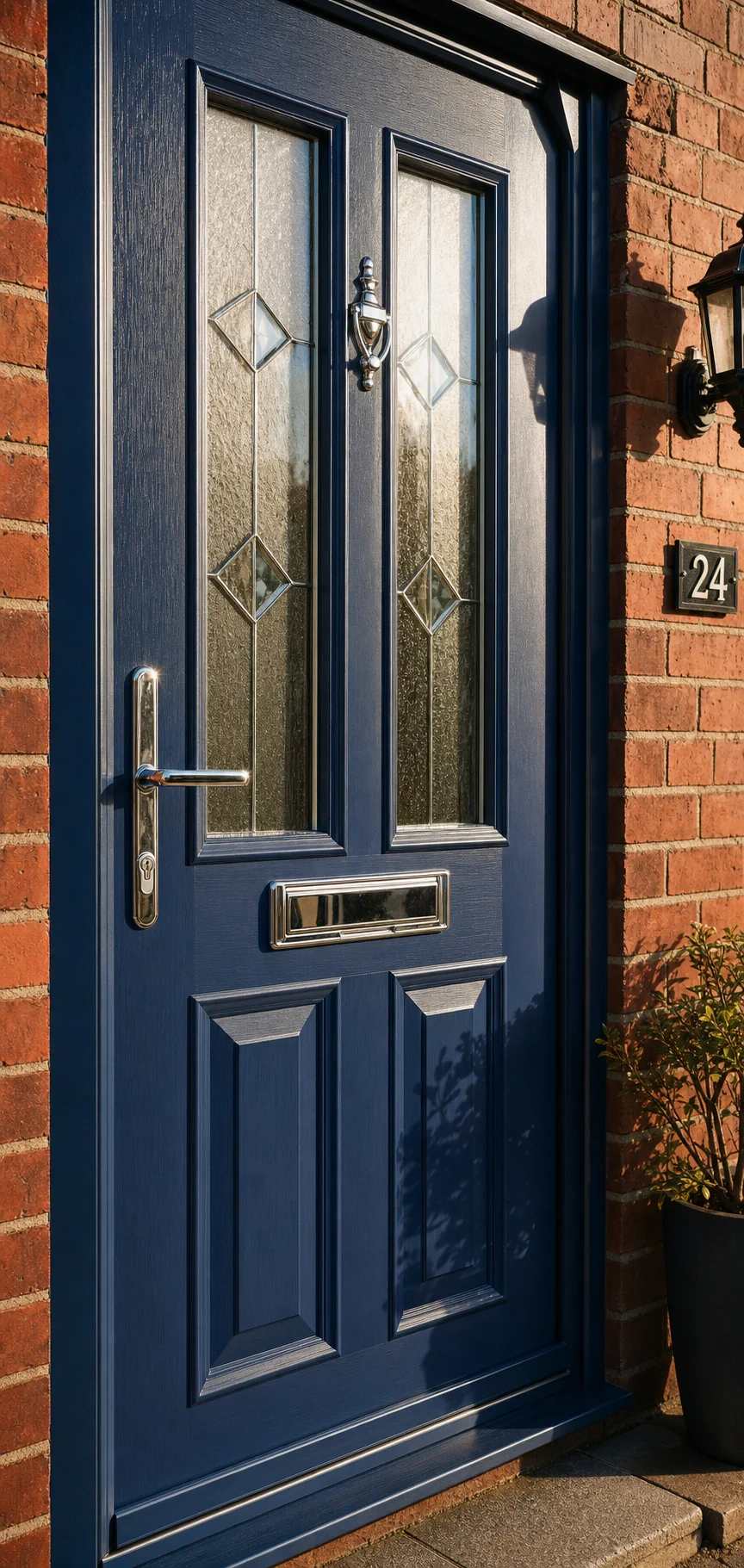
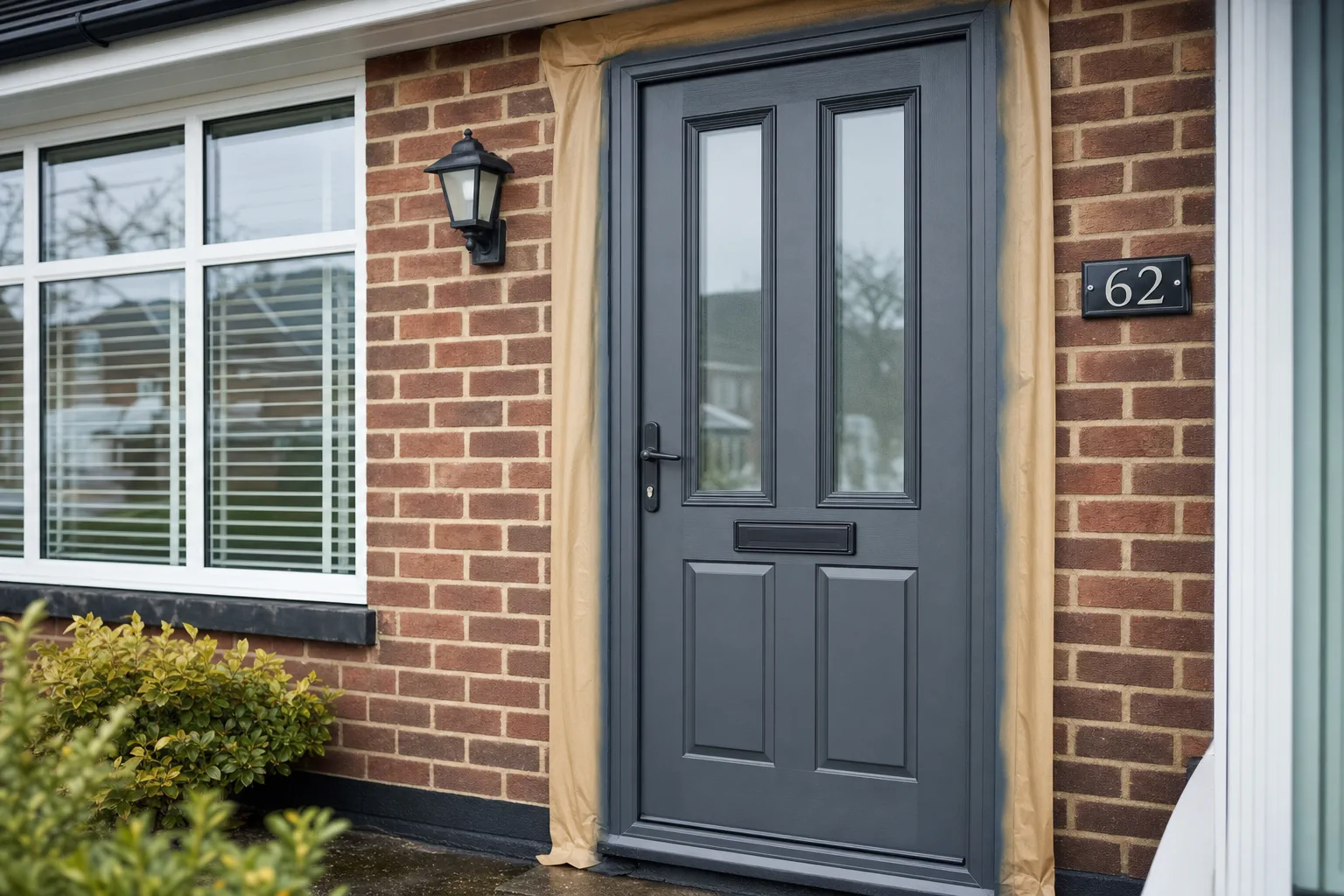
The images above are colour and finish references used to show how a shade reads on a surface. They are not photographs of ProFinish customer projects. Genuine ProFinish work is published in Our Work as each job is completed and the customer is happy for it to be shown.
Getting it right
Exterior only is the common choice on windows, since that is what faded and what the street sees. Internal faces need internal masking and dust protection, and are quoted separately rather than assumed.
RAL 7016 is the standard and the safest choice for matching existing anthracite. RAL 7015 and 7024 are worth seeing if you want a slightly different weight of grey.
Have the frontage assessed together for a coordinated colour scheme and work plan. The final quote lists the number and size of surfaces, repairs, access requirements and expected duration. Larger frontages and double garages are quoted individually.
uPVC sills, fascia trims and cladding are often the most weathered elements and are easy to overlook. They are cheap to include while set up and expensive to come back for.
Exterior spraying needs dry conditions and sensible temperatures for the coating to flow and cure correctly. If a day is wrong for it, it gets moved rather than rushed.
Once your booking deposit is received you can ask for a sprayed sample panel in your chosen grey and sheen, where practical for the job. Grey shifts more than any other colour family between overcast and direct sun.
Straight answer on whether a sample makes sense for your job.
Questions
Send a photo of your frontage, a close-up of one frame so the condition is visible, and a rough count of how many windows you have. That is enough for a guide price and an honest answer on whether the frames are worth spraying.