Steel up-and-over doors
The most common door on Bedfordshire estates and an excellent candidate. Faded factory finish, chalking and surface rust are all normal and all treatable with a direct-to-metal system.
Transformation Guide
A garage door is often the largest single surface on the front of a house, and a faded one drags the whole frontage down. Respraying it is the highest-impact change available for the money.
Look at any street and the garage doors tell you which houses have been maintained. They are large, they face the weather all day, and they are almost always the last thing anyone thinks about. A chalky, faded or lightly rusted door makes a well-kept house look tired.
A new garage door averages around £1,700 fitted and can reach £2,500 or more, and that is a sensible spend if the door is mechanically finished or has rusted through. It is a poor spend if the door still runs smoothly and only looks bad. Respraying starts at £395 for a single and £575 for a double.
Because the surface area is so large relative to the cost, this is the change that most reliably surprises people. It also pairs naturally with the front door and window frames, which is why the Full Front Refresh exists: all three in one visit, one colour scheme, an agreed colour and sheen, from £1,295.
Suitability
The question is whether there is sound material to bond to and a mechanism that still works. Cosmetic decline is exactly what this is for.
The most common door on Bedfordshire estates and an excellent candidate. Faded factory finish, chalking and surface rust are all normal and all treatable with a direct-to-metal system.
Aluminium takes a direct-to-metal coating well. Sectional doors have more panel edges and joints to work around, which adds preparation time but changes nothing about feasibility.
GRP needs a different adhesion approach from metal, closer to how composite front doors are treated. Identified at survey so the correct system is used from the start.
Domestic roller doors can be sprayed, though the slat profile and the way the curtain rolls need careful handling. Commercial roller shutters are covered on the commercial page.
Surface rust is taken back, treated and coated. Rust that has perforated the panel, or a bottom edge that has rotted through, means there is nothing sound to bond to. That is a replacement and you will be told so.
Springs, cables and tracks are not touched, so a door that already binds, sticks or will not stay up needs mechanical attention first. Coating a faulty door just gives you a smart door that still does not work.
The process
Metal is unforgiving. Any rust or contamination left under the coating will come back through it, so the preparation stages carry the job.
Door material, mechanism type, size and condition are established, and the extent of any rust is assessed properly rather than from a photo alone. This determines the coating system and whether the door needs full strip-back, which is priced separately.
Years of road film, exhaust residue, algae and oxidised factory finish are washed and degreased off. On a large surface this takes real time and it is not optional, because coating over chalk is coating over dust.
Any surface rust is taken back to sound metal and treated so it cannot creep back under the new coating. Dents and deep scratches are addressed at this stage. This is the difference between a door that looks good for eight years and one that blisters in two.
Springs, tracks, rollers, cables, handle, lock and hinges are masked, along with the surrounding brickwork, drive, path and any planting. Nothing that needs to move or flex receives coating.
Two coats in your chosen RAL colour and sheen. Exterior surfaces get a weather-resistant system matched to the substrate, confirmed in your quote. It is built for a surface that takes full weather exposure and daily mechanical use.
Masking is removed, the door is operated through its full travel to confirm nothing has been impeded, and the site is cleared. You get a written three-year exterior finish guarantee.
Colour and finish
The dominant choice and the reason it has its own dedicated guide. It reads as modern and deliberate against red brick, buff brick and render, and it coordinates with the frames and front door most people are also updating.
Sharper and more formal than anthracite. Excellent against render and pale brick. On a large surface in direct sun it shows dust and water marks more readily than grey.
RAL 7035 light grey and similar shades suit houses where a dark door would visually dominate the frontage. Worth considering on a smaller house with a double garage, where anthracite can overwhelm.
Satin is the sensible default. Gloss on a large, flat garage door panel highlights every ripple and dent in the metal underneath, and garage doors accumulate plenty of both over twenty years.
The most cohesive frontages use one colour across garage door, front door and window frames. That is exactly what the Full Front Refresh does, sprayed in the agreed colour and sheen so the colour genuinely matches rather than nearly matches.
Once your booking deposit is received you can ask for a sprayed sample panel, where practical for the job. Greys shift noticeably between overcast and bright conditions, and a garage door is a large area to get wrong.
Reference imagery
Colour and finish references. Genuine completed ProFinish garage door work is shown in Our Work.
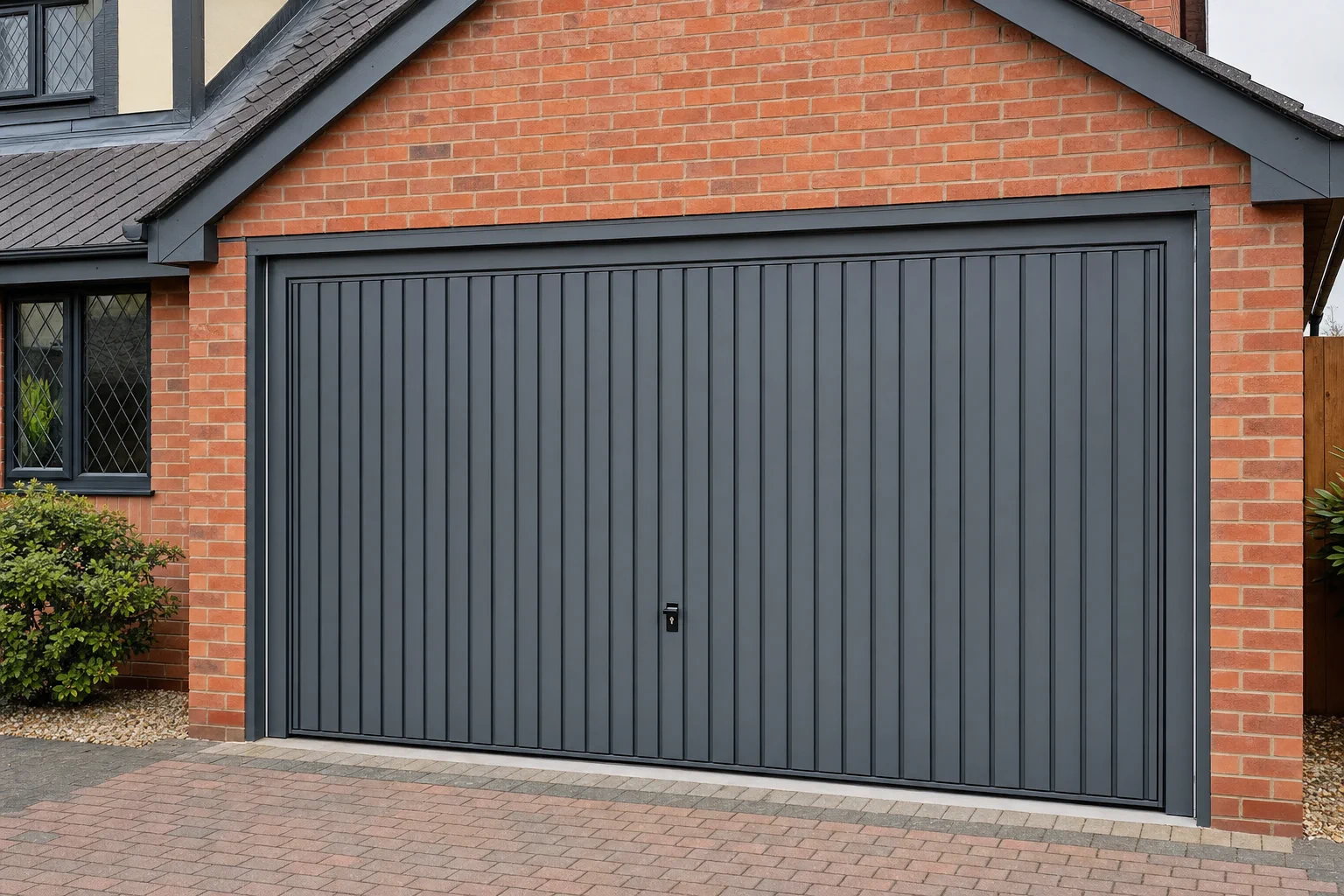
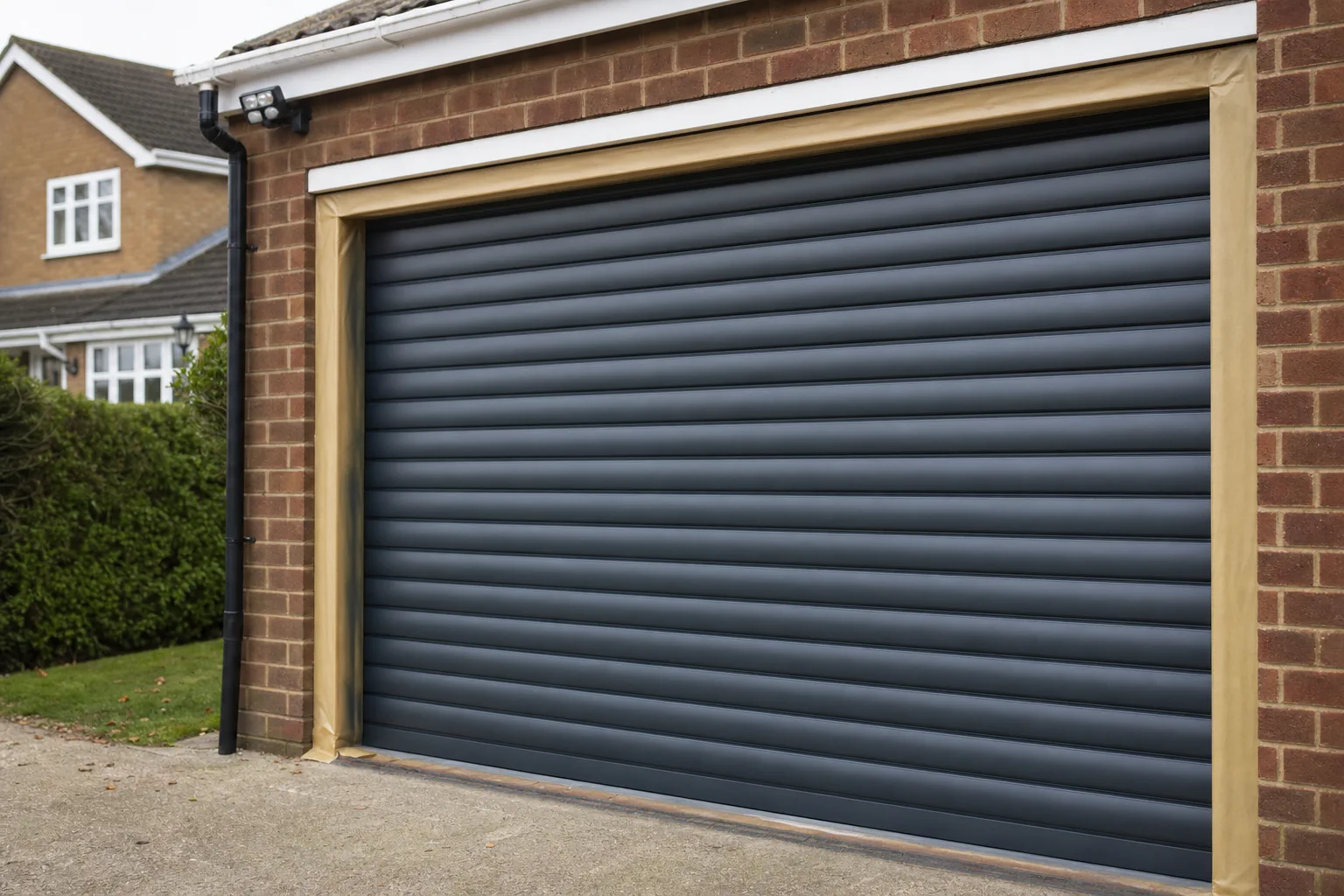
The images above are colour and finish references used to show how a shade reads on a surface. They are not photographs of ProFinish customer projects. Genuine ProFinish work is published in Our Work as each job is completed and the customer is happy for it to be shown.
Pricing factors
Singles start at £395, doubles from £575. Doors needing full strip-back are surveyed and priced separately.
The clearest factor. A double is roughly twice the surface area and takes proportionally more preparation, masking and coating time.
Light surface rust is routine. Widespread rust needing extensive taking back, treating and making good is where a door moves into the surveyed and separately priced category.
A flat or lightly ribbed up-and-over panel is the quickest. Deep-ribbed profiles, sectional doors with multiple panel joints, and roller slats all take significantly longer to prepare and coat properly.
Steel and aluminium take a direct-to-metal system. GRP needs a different adhesion approach. Neither is unusually expensive, but the system has to match the substrate.
Spraying the door frame and surround at the same time avoids a fresh door sitting in a tired frame. Cheap to add while set up, expensive as a return visit.
Have the frontage assessed together for a coordinated colour scheme and work plan. The final quote lists the number and size of surfaces, repairs, access requirements and expected duration. Larger frontages and double garages are quoted individually.
An even sheen across the entire panel with no brush marks, no runs and no patchiness, which is harder to achieve on a large flat vertical surface than on any other part of a house. Ribs, returns and the bottom edge should be as well covered as the main face, since the bottom edge is where weather and rust always start.
No overspray on the brickwork, the drive, the path or the frame. The mechanism should be clean and the door should run through its full travel exactly as before, with no stiffness introduced anywhere.
Follow the care instructions supplied for the selected exterior coating. Exterior work carries a written three-year finish guarantee from the person who sprayed the door.
Straight answer on whether a sample makes sense for your job.
Questions
Send a straight-on photo of the door, a close-up of the bottom edge where rust usually starts, and a wider shot of the frontage. Mention whether it is single or double. Jay reviews your photos and confirms a guide price and availability.